Transforming a WordPress site into a structured rental product
SaaS
WordPress
UX/UI Design
Development
SaaS
A look at how we helped ToFindProperty design a multi-agent rental platform where users can confidently compare options and trust listings — even when content comes from many independent agents.
About the project
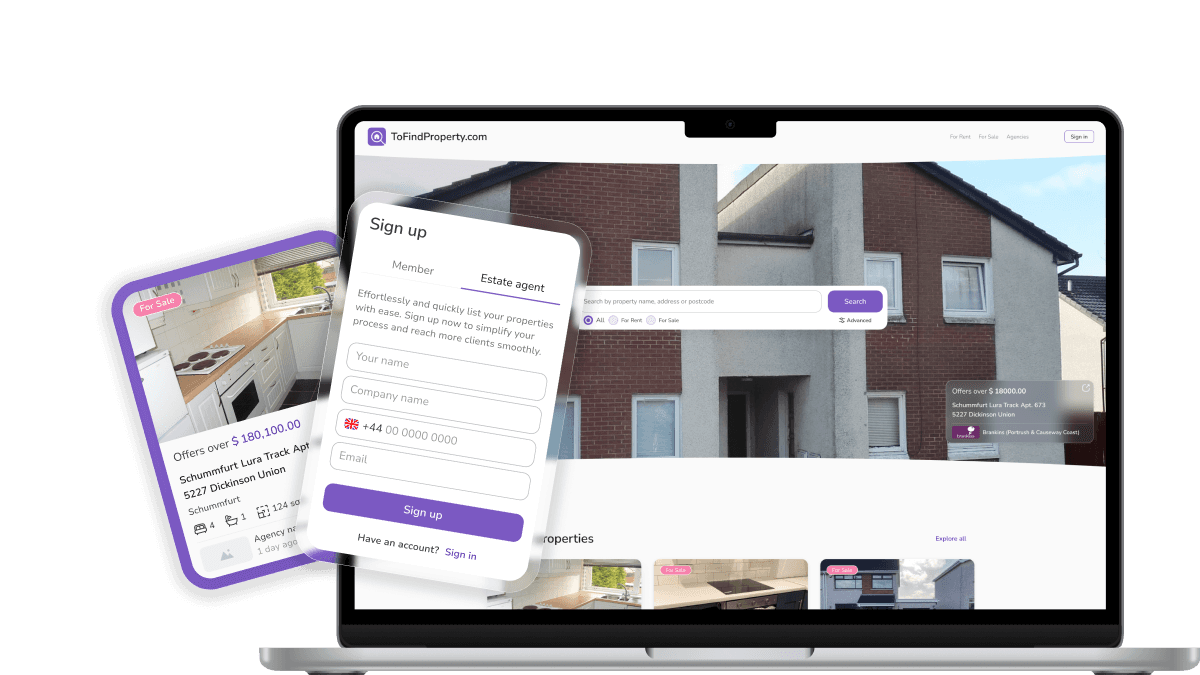
ToFindProperty is a rental marketplace built around real-estate agents who manage and publish property listings on behalf of owners.
The client engaged our team to build not just a platform, but a reliable product experience — one that users can trust and agents can scale with.
The core goal was to create:
a predictable, comparable browsing experience for renters,
clear product rules for agents publishing content,
a foundation that supports growth without degrading UX.
The platform was delivered on WordPress with custom PHP logic and plugins, with full ownership of product thinking, UX, UI, design guidelines, and implementation.


Challenge
Many rental platforms fail at the product level, not the technical one.
As inventory grows:
listings become harder to compare,
key details are missing or inconsistent,
users stop trusting what they see.
For ToFindProperty, the main challenge was product integrity:
how to ensure that every listing feels like part of the same product — not a collection of unrelated posts created by different agents.
The platform needed to:
enforce structure without killing flexibility,
support multiple agents without fragmenting UX,
create a sense of trust through consistency and clarity.
Our Approach
We treated ToFindProperty as a product system, not a website.
Journey & Roles Alignment
We defined clear responsibilities at the product level:
agents are responsible for accurate data,
admins are responsible for standards and visibility,
users interact only with curated, comparable listings.
This allowed us to design flows that protect the user experience by default.
UX and Visual Strategy
The UI was designed to answer one core user question:
“Can I confidently compare these options?”To achieve this, we focused on:
consistent information hierarchy across all listings,
stable layouts that don’t change from property to property,
restrained visuals that prioritize clarity over decoration.
Platform Architecture
WordPress was used as a flexible engine, but not as a free-for-all CMS. We implemented:
structured property content models,
controlled taxonomies for attributes and locations,
validation logic via custom PHP to prevent incomplete listings.
This ensured that every published property meets minimum product standards.
Design System & Product Guidelines
Beyond UI components, we defined product rules:
what information must always be present,
how prices, images, and highlights are displayed,
how actions and statuses behave across the platform.
These rules act as guardrails for future development.
Key Features
Comparable-by-default listings
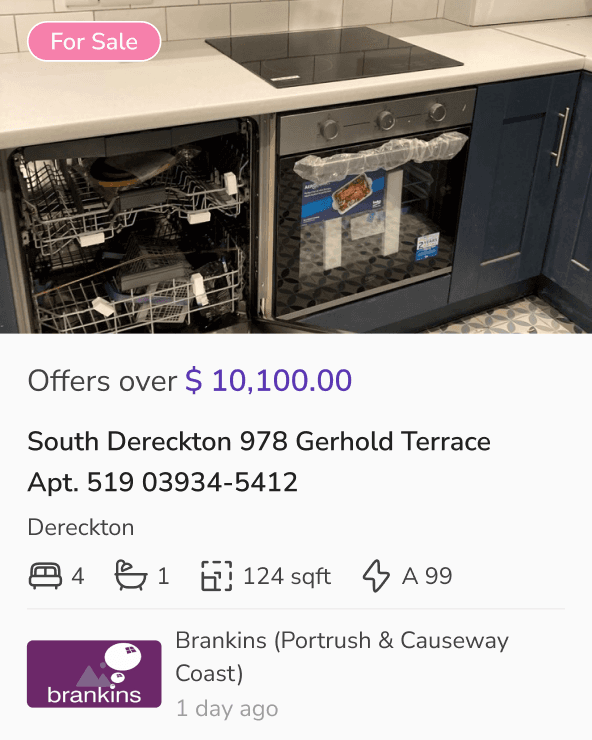
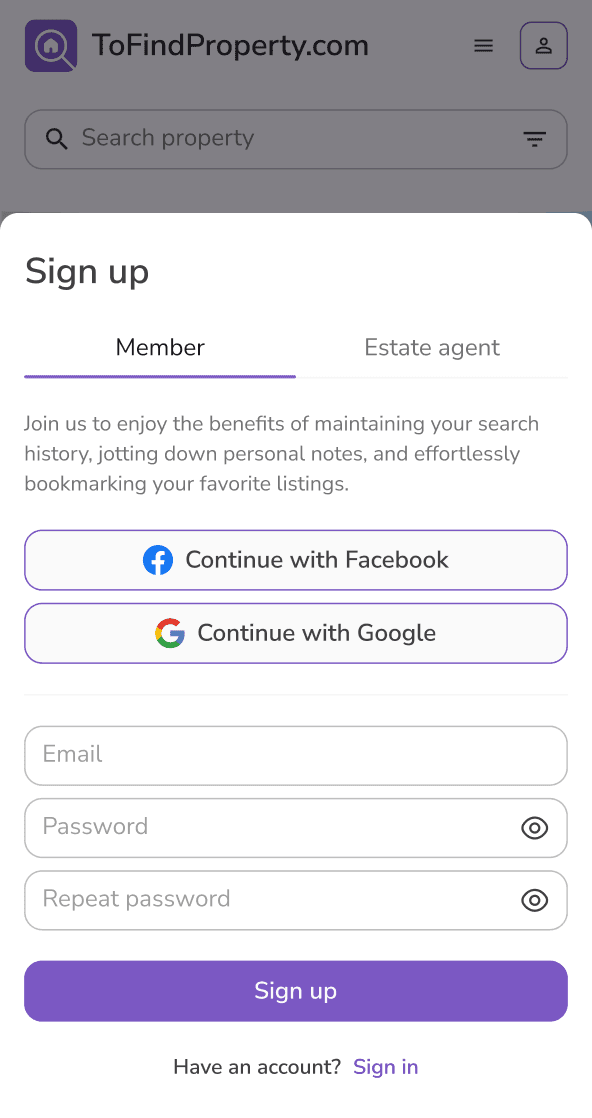
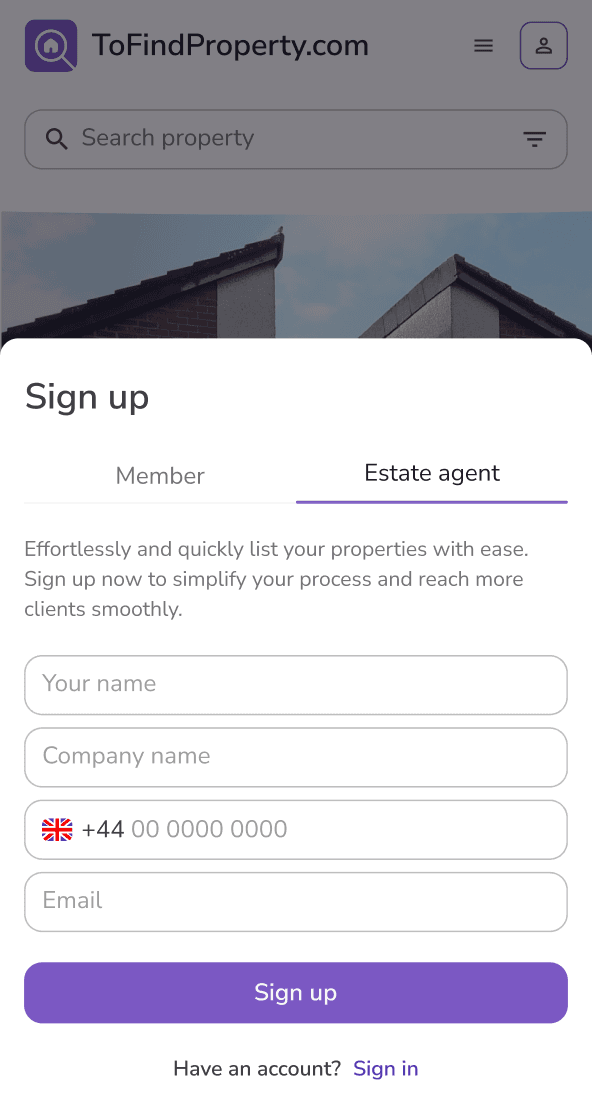
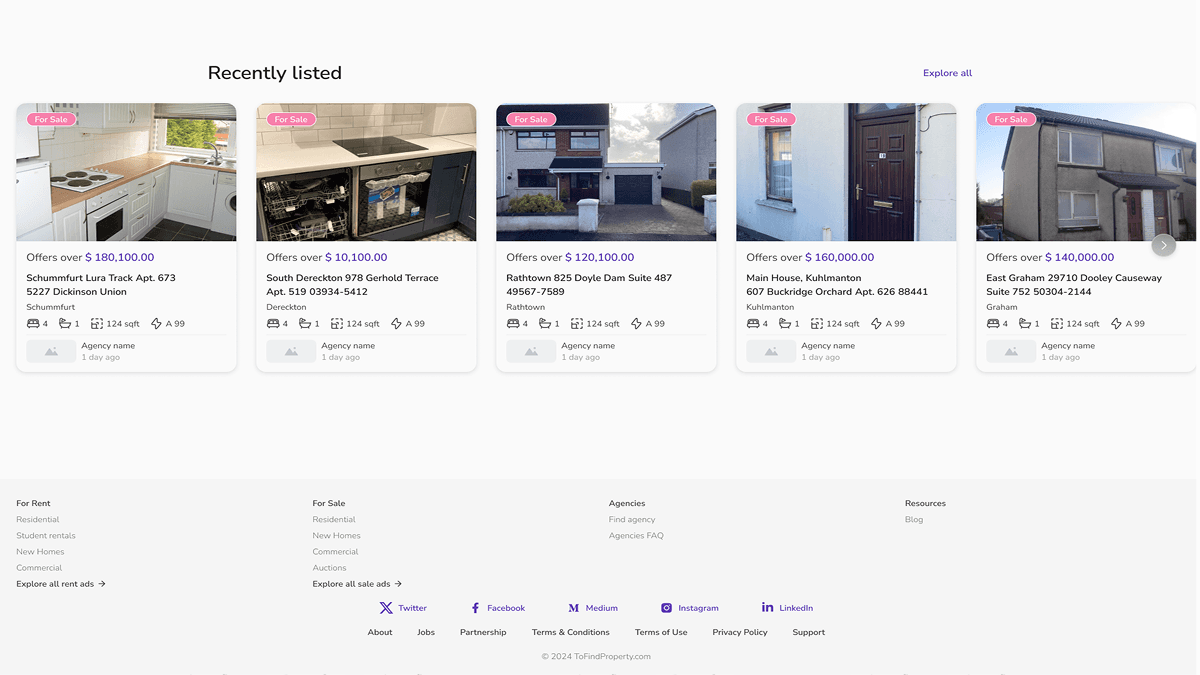
Every property follows the same structure, making side-by-side comparison intuitive for users.
Structured flexibility for agents
Agents can highlight unique features without breaking layout, hierarchy, or expectations.
Product-level content validation
Listings cannot be published without key data, protecting overall marketplace quality.
Stable browsing and filtering logic
Search and filters behave consistently across the entire inventory, reinforcing predictability.
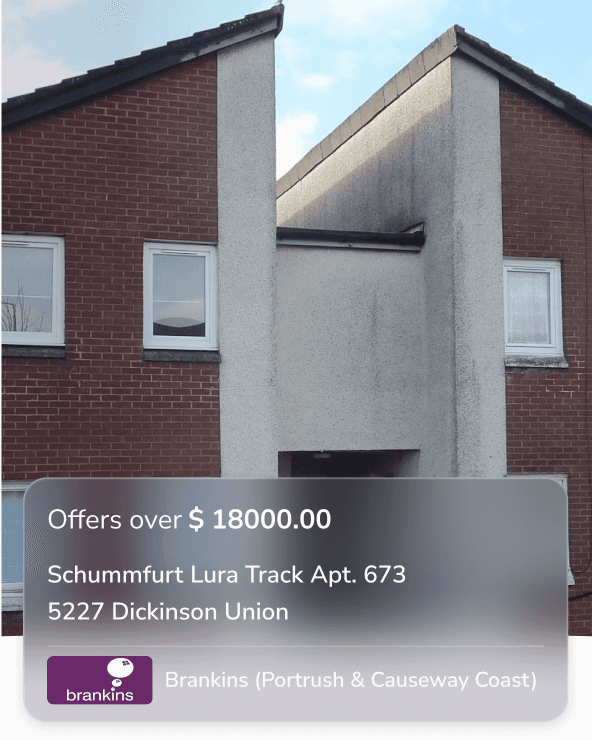
Clear visual hierarchy
Price, availability, location, and key attributes are always surfaced in the same order.
Scalable content model
New property types or attributes can be added without redesigning existing listings.
Unified product language
UI patterns, terminology, and interactions remain consistent across public and internal screens.
Tech Stack
Frontend & CMS: WordPress
Backend logic: PHP
Design: Figma
Results
Production-ready platform launched in ~1.5 months, ready for real market usage.
Users gained a clearer, more trustworthy browsing experience through consistent listings.
Agents were onboarded without degrading product quality.
Content remained comparable and structured as inventory grew.
The platform established strong product foundations before scaling traffic or features.
Why This Matters
In rental platforms, trust is a product feature.
ToFindProperty demonstrates that:
comparability drives confidence,
consistency reduces decision fatigue,
and product rules matter as much as UI polish.
By treating content structure, UX patterns, and role boundaries as first-class product decisions, the platform avoided a common trap of growing supply faster than user trust — and instead built a system ready for sustainable scale.
Astana, KZ
Turning complex ideas
into high-performance products
©
2026
AlexFrontEnd
A. Bobykin SP · TIN 821019050222
NP 113, 23 Bukhar Zhyrau St, Astana, Kazakhstan