From legacy desktop to cloud SaaS
SaaS
Development
Automation
Dashboards
UX/UI Design
We migrated the entire system to a fluid Vue and Quasar web application, giving power users total control over their workspace via a custom-built, modular Ribbon engine.
About the project
In the enterprise and industrial software landscape, accessibility dictates operational speed. For years, heavy corporate applications relied strictly on localized desktop installations, bounding teams to specific hardware and creating massive update bottlenecks.
Orkestra set out to break this limitation by migrating their proven desktop core into a fully collaborative cloud environment. The challenge was to take an incredibly dense, feature-heavy desktop interface and rebuild it into a smooth web workspace without losing native processing speeds or confusing long-term power users.
The core objective was to deliver a complete UX/UI transformation on top of a modernized frontend stack, optimizing legacy workflows and introducing flexible, user-driven interface customization.


Challenge
Migrating desktop software to the web introduces major usability hurdles: web browsers have less real estate, different navigation paradigms, and strict performance limits compared to local operating systems.
For Orkestra, the core friction points were highly technical:
Re-engineer a complex multi-layered feature map into a scannable, lightweight web layout.
Design and implement a modular UI Ribbon Builder allowing users to customize their toolbars dynamically.
Optimize the existing feature set to eliminate loading latency and interaction delays within the browser.
Update the visual layer using Vue and Quasar to ensure bulletproof component consistency and fast rendering.
This challenge represents a classic enterprise migration problem: how to maintain high-density data utility while adopting the speed, aesthetic, and flexibility of modern cloud products.
Our Approach
We treated the Orkestra migration as an end-to-end product modernization, planning the new workspace structure around the daily velocity of enterprise power users.
From day one, our team assumed complete ownership of the frontend turnaround — driving user role mapping, interface layout cleanup, custom component engineering, and optimization of the rendering pipeline.
Operating in tight alignment with the backend architecture team, we translated legacy software behaviors into smooth, web-native patterns. This approach allowed us to upgrade core feature logic and styling simultaneously, ensuring a rapid development cycle.
Here is how we executed the cloud migration:
Dismantling the Desktop Layout Matrix
We conducted a thorough audit of the original software paths. We stripped away heavy nested menus and flat dialog boxes, re-arranging the system into a modern, single-page application framework that groups tools by active user context.
Engineering the Custom UI Ribbon Builder
To preserve the powerful layout flexibility of desktop software, we engineered a custom Ribbon component from scratch. Users can drag, drop, group, and hide specific action blocks, building a personalized, high-efficiency command center directly inside their browser window.
Modernizing the Vue + Quasar Tech Stack
We utilized the Quasar framework to construct an enterprise-grade web component library. By defining strict global tokens for density, typography scales, and high-contrast styling layers, we achieved ironclad consistency across all data-heavy screens.
Optimizing Interface Responsiveness
To counter browser-side lag, we practiced radical layout optimization — implementing virtualization for heavy data sheets, stripping out bloated layout steps, and refining component lifecycles. This resulted in an ultra-crisp, desktop-grade interface state.
Every interface tab, custom ribbon icon, and modal workflow was engineered to enforce three strict parameters: structural clarity, deep user customization, and immediate cloud latency execution.
Key Features
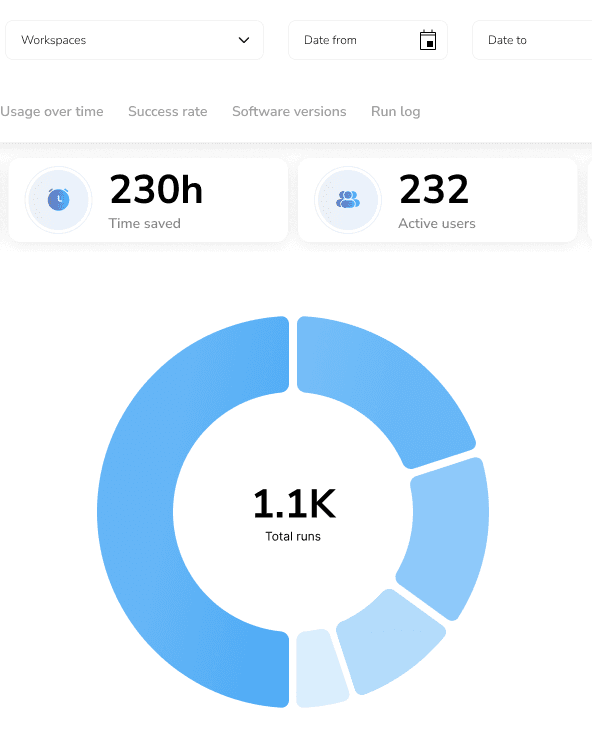
Cloud Workspace Dashboard
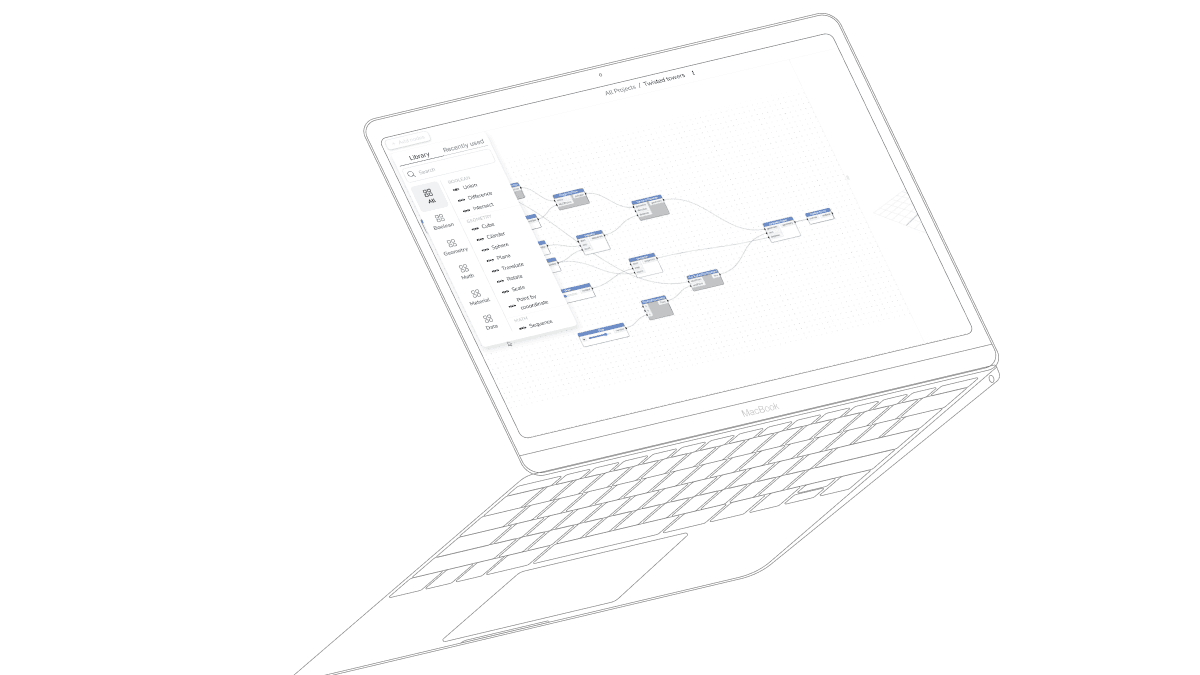
A high-performance web landing environment replacing the legacy desktop welcome state, giving users immediate access to active remote projects and recent files.
Custom UI Ribbon Builder
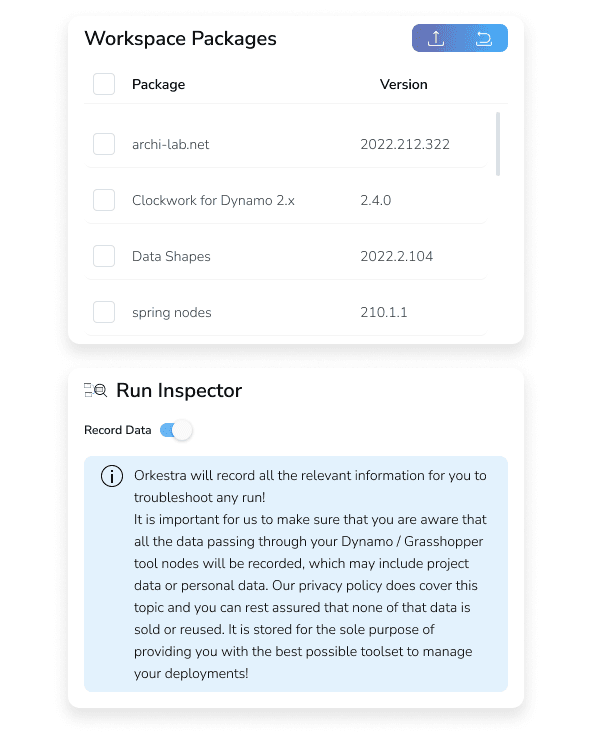
An interactive, drag-and-drop toolbar engine allowing operators to construct custom action bars, optimizing the workspace for their specific daily tasks.
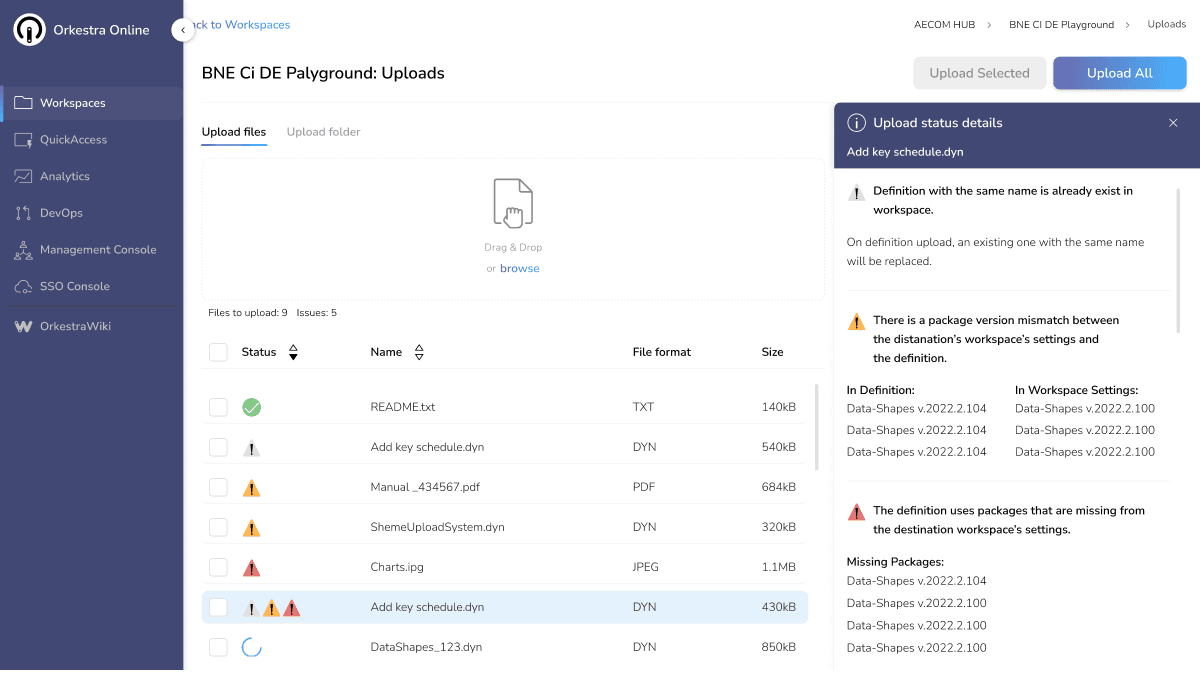
Dense Data-Grid Layouts
Highly optimized, scannable data sheets engineered with Quasar to handle hundreds of active lines without causing visual fatigue or browser lagging.
Contextual Action Ribbon
A dynamic top toolbar that automatically updates its displayed features based on the item or section the user has currently selected.
Global Navigation Hierarchy
A streamlined side navigation system that organizes complex software paths into distinct, logical work modules (Overview, Structure, Builder, Management).
Lightweight Overlay Modals
Frictionless, contextual settings cards that pull up configurations instantly without navigating the user away from their active editing canvas.
Unified Visual Token Ledger
A centralized design system built on Quasar variables, ensuring identical padding rules, component behaviors, and font tracking across every screen.
Real-Time Active Project State Sync
A reliable, low-latency background state engine that auto-saves workspace adjustments and ribbon preferences directly to the user’s cloud profile.
Tech Stack
Frontend Core: Vue.js, TypeScript
Component Infrastructure: Quasar Framework
Design Systems: Figma
Results
Successfully migrated a legacy desktop interface into a fully functioning cloud SaaS platform.
Shipped a custom UI Ribbon Builder, granting enterprise clients complete autonomy over their working environment.
Drastically reduced interface navigation complexity by re-architecting the entire product layout from the ground up.
Upgraded the frontend performance to native desktop feel, ensuring zero-latency rendering using modern Vue mechanics.
Why This Matters
For enterprise organizations and product teams, Orkestra serves as a definitive case study on cloud modernization. Keeping business-critical tools locked behind localized installations slows down team scaling and creates disconnected data ecosystems.
A focused, Vue-and-Quasar full-scale migration demonstrates how:
Transforming rigid desktop menus into customizable web ribbons restores complete agility to power users.
Re-architecting dense informational layouts with strict design systems ensures excellent data utility regardless of software complexity.
Migrating to modern cloud architectures allows companies to future-proof their software assets, scaling delivery on their own terms.
Instead of staying trapped in an outdated desktop installation model, Orkestra deployed an agile, immersive cloud workspace that elevates operational speed and expands business reach.



Astana, KZ
Turning complex ideas
into high-performance products
©
2026
AlexFrontEnd
A. Bobykin SP · TIN 821019050222
NP 113, 23 Bukhar Zhyrau St, Astana, Kazakhstan