Automating heavy stock calculations right inside a native iOS camera
Mobile App
iOS
UX/UI Design
Development
Automation
A closer look at how we partnered with an early-stage startup to engineer proprietary computer vision and a scalable B2B ecosystem into a functional, investor-ready iOS MVP.
About the project
In the product landscape, converting an ambitious idea into a functioning deep-tech asset requires more than code — it demands seamless integration between advanced automation and real-world user workflows.
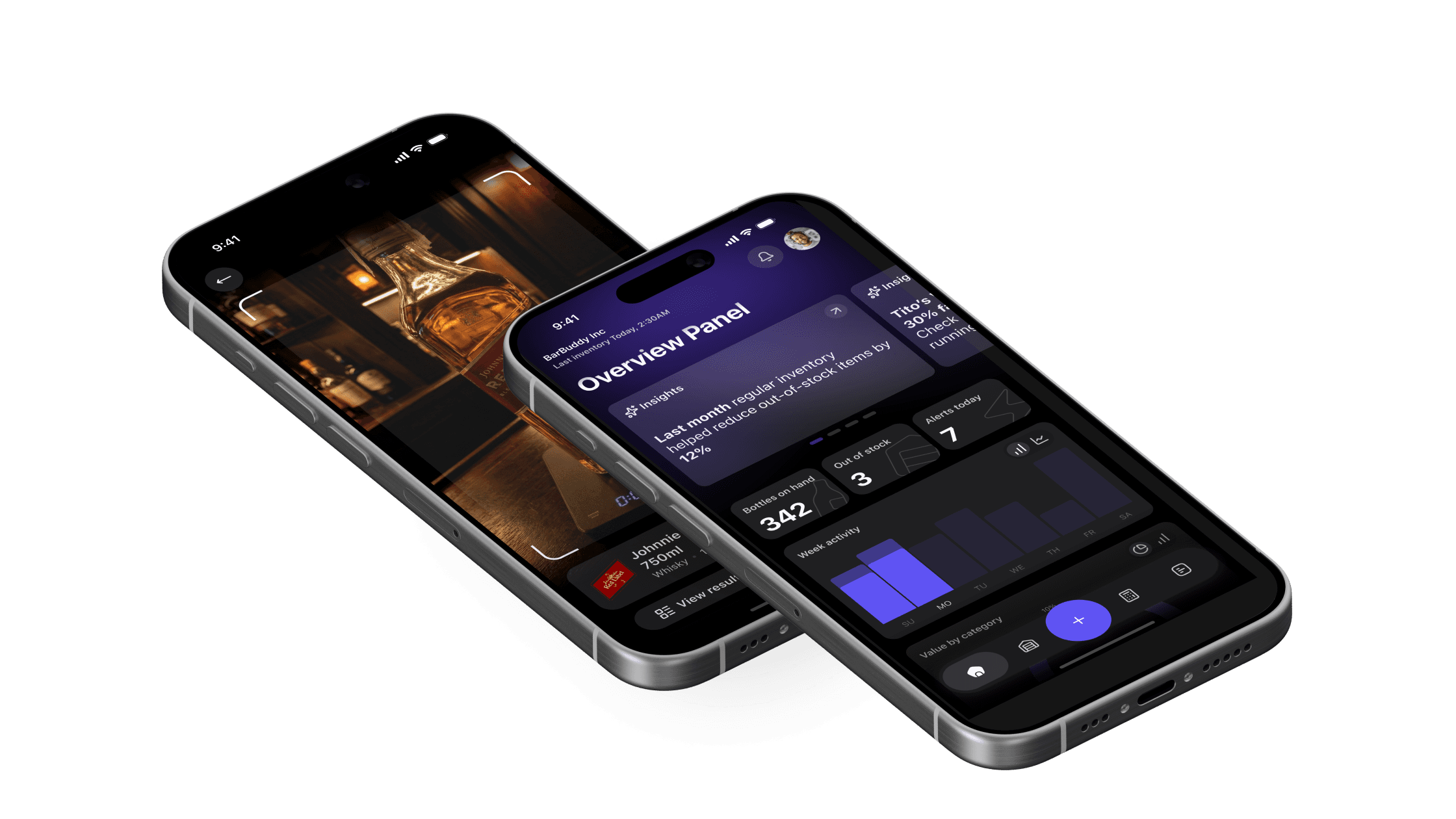
The founders of BarBuddy came to us with a raw, non-functional mobile concept for venue inventory. It lacked the technical backbone to solve the industry's core issue: the disconnect between physical stock and digital logging. We stepped in as their strategic product team to design, engineer, and launch a proprietary dual-AI vision system directly inside a production-ready iOS platform.
Our mission was to transform an empty mobile prototype into an intelligent, market-ready SaaS ecosystem capable of automated asset auditing.

Challenge
The startup faced a massive technical and operational gap: they had an ambitious vision for automation, but creating a functional MVP required building robust computer vision that could operate flawlessly in chaotic environments.
The team needed to:
Engineer a reliable dual-AI vision system (reading both labels and scale displays simultaneously) from scratch within a tight 3-month window.
Design a human-centric interaction model around this new automation so that tired operators would trust and adopt the tool on day one.
Build a high-density data UI capable of displaying hundreds of SKUs without causing cognitive fatigue.
Deliver a stable, scalable mobile architecture ready for immediate venue testing and investor vetting.
This challenge represents a classic productization friction point: taking a conceptual startup idea and building the underlying deep-tech infrastructure to make it a high-value commercial reality.
Our Approach
We treated the client's concept not just as a design blueprint, but as a starting point to build an entirely new automated workflow from the ground up, shaping the AI capabilities around real-world shift dynamics.
From day one, our team took end-to-end ownership of the development roadmap — bridging the gap between deep UX strategy, machine learning integration, and optimized iOS implementation.
Operating as an elite product squad, we worked in lockstep with the startup’s founders. This high-velocity alignment guaranteed that the newly developed AI features directly advanced their go-to-market timeline and investor readiness.
Here is how we executed the productization strategy:
Architecting the Automated Workflow
We audited the startup's raw layout against the physical realities of late-night tracking. By replacing manual entry screens with continuous camera logic, we flattened the application into a single-stream, one-handed interaction model optimized for fatigued users.
Designing for Extreme Environments
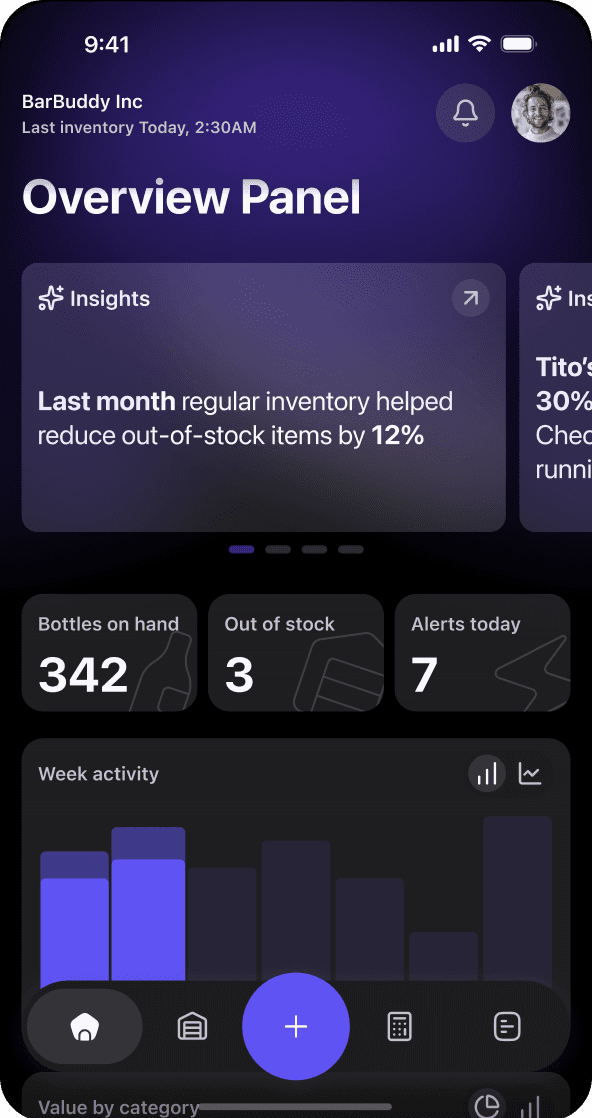
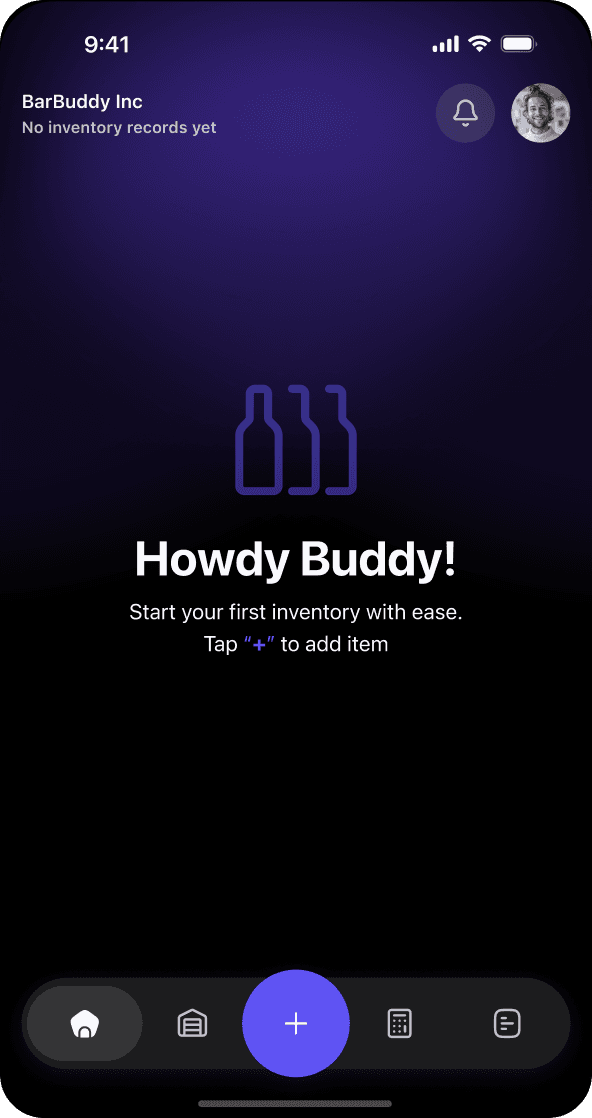
We built a tailored visual strategy from scratch. The interface prioritizes high-contrast components, oversized touch targets, and a strict dark-mode color taxonomy specifically engineered to perform in low-light, high-distraction environments.
Building the Core AI Engine
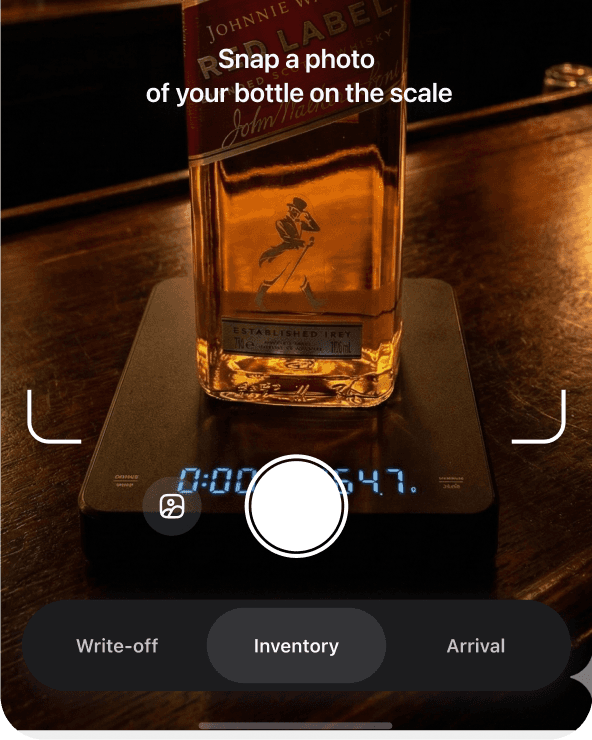
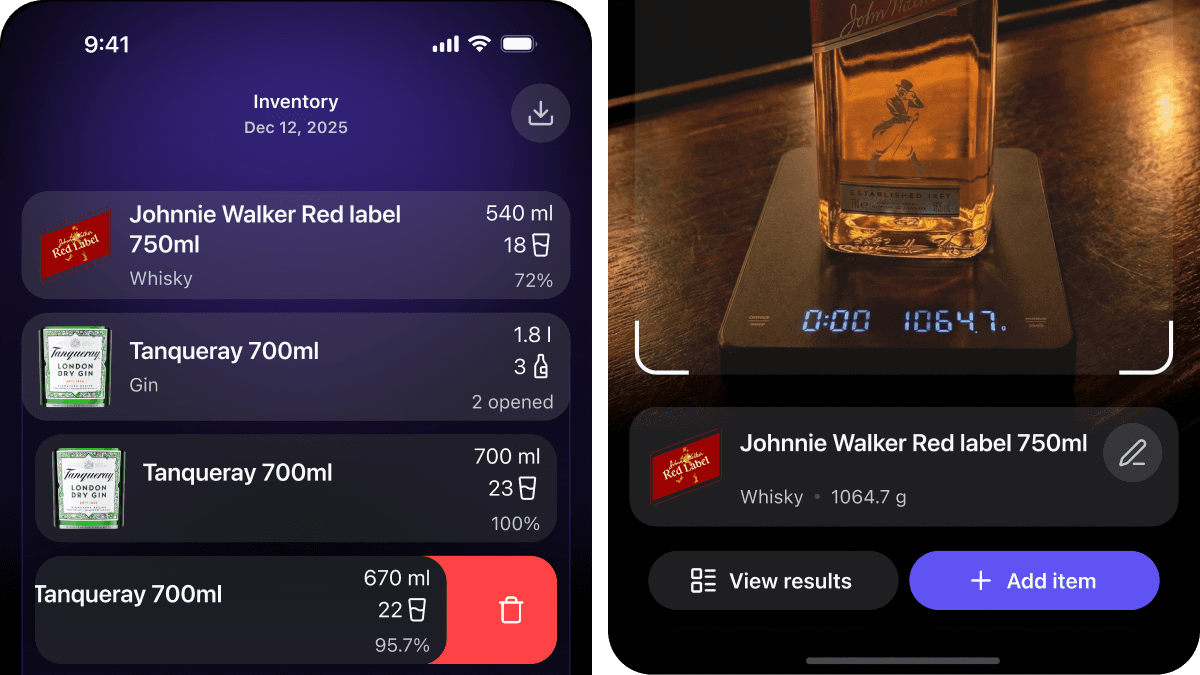
We engineered and integrated the core computer vision models into a fluid, native iOS camera experience. By designing a lightning-fast "Scan & Confirm" feedback loop, we enabled the application to extract data from legacy physical scales instantly, bypassing the need for capital-intensive IoT upgrades.
Ruthless Scoping & High-Velocity Loops
To launch a functional AI tool within the 3-month window, we practiced radical subtraction — stripping away non-essential analytics dashboards to perfect the core automated auditing engine. Weekly live-demo alignment sessions allowed the founders to pitch a rapidly maturing product to early stakeholders throughout the cycle.
Every layout, interaction, and data string was engineered to transform a conceptual prototype into a highly accurate, AI-driven commercial asset.
Key Features
Dual-Role Access Control
A secure, role-based infrastructure with specific interfaces for front-line operators (streamlined for high-speed scanning) and area managers (focused on inventory reconciliation, discrepancy auditing, and cost analysis).
Computer Vision Scanning Hub
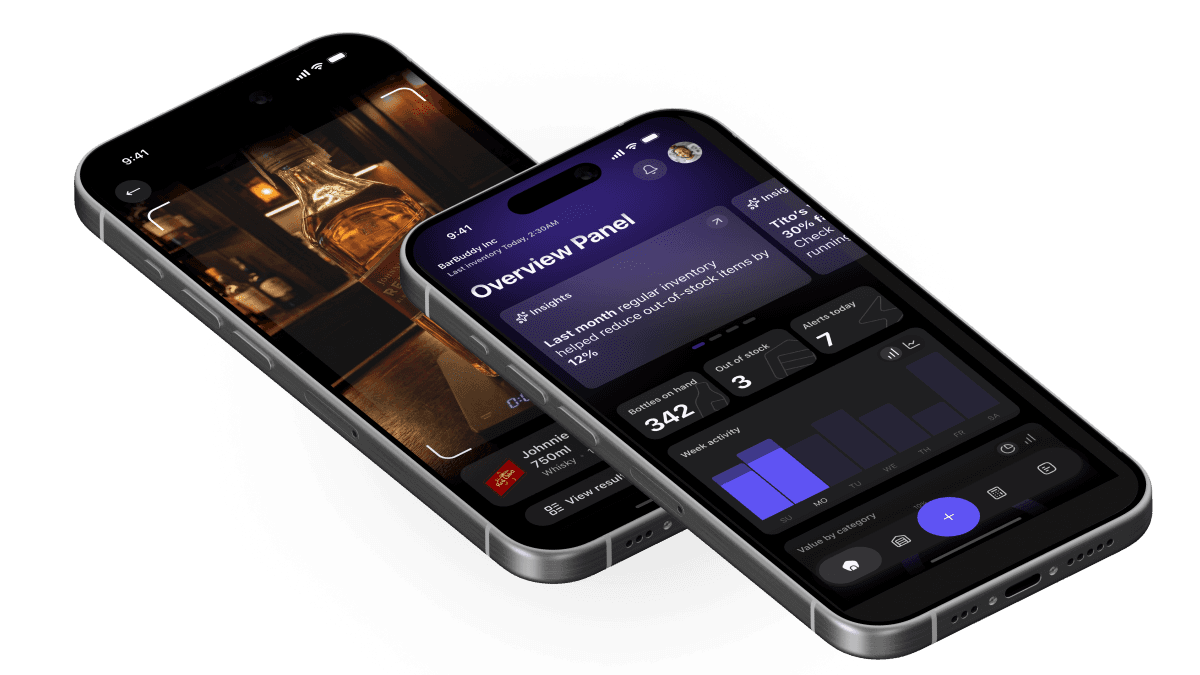
The core intelligent interface that orchestrates the dual-AI scanner, cross-referencing fluid weight and brand recognition in a single camera frame.
Rhythmic One-Handed Scanner
A highly focused camera UI that eliminates data-entry friction, allowing users to move fluidly from item to item in a fast, continuous scanning state.
Frictionless Context-Sheet Adjustments
An intuitive bottom-sheet layer with robust tap zones, allowing operators to rapidly override or confirm AI outputs, which paradoxically maximizes user confidence in the automation.
Smart Metric Grouping
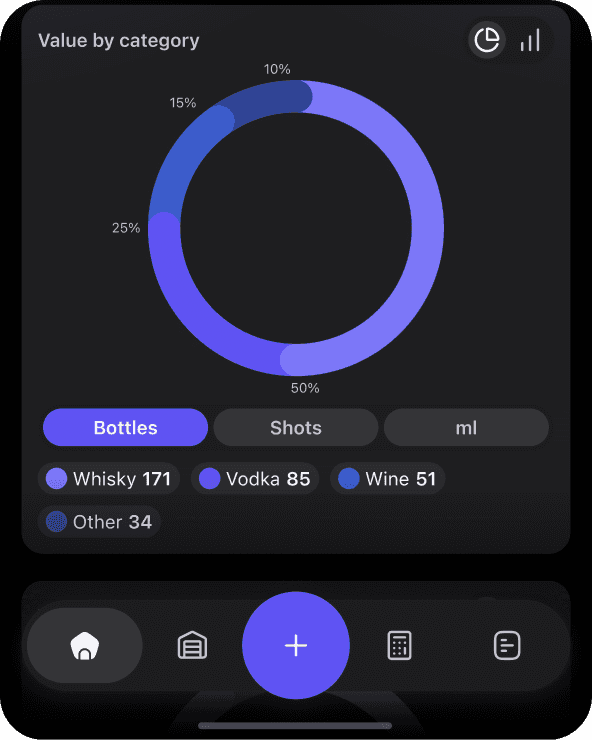
A dynamic ledger UI that automatically clusters matching SKUs and instantly converts abstract volume ($ml$) into actionable commercial units (shots) — the functional currency of the industry.
Post-Session Yield Metrics
An instant operational overview screen that rewards completion by highlighting precise financial audit values the second a session wraps up.
Bi-Directional POS Synchronization
A scalable integration layer engineered to seamlessly pull actual sales data from the venue’s existing terminal systems and cross-reference it with live physical inventory logs.
Ambient-Optimized High-Contrast Mode
A specialized UI theme leveraging aggressive typography hierarchies and color-coded statuses to ensure perfect legibility in dark back-office spaces.
Founders' Performance Overview
A high-level corporate dashboard giving decision-makers absolute clarity over total variance metrics, live inventory value, and active multi-location audit reports.
Tech Stack
Frontend : React Native
Backend : Node.js, GraphQL API, Redis caching layer
Design Systems: Figma
Results
Developed and delivered a fully functional, AI-powered B2B MVP in just 2 months from a non-functional concept.
Shipped a highly polished product design and end-to-end technical vision that directly secured Pre-Seed venture capital.
Accelerated the core inventory logging workflow by 70%, slashing tracking times from 2 hours to 40 minutes.
Achieved a 98% data verification accuracy rate, completely validating the new AI model and tech stack stability.
Why This Matters
For B2B SaaS founders, BarBuddy stands as a textbook example of how a development agency can take a raw mobile concept, build the complex AI infrastructure from scratch, and turn it into a highly scalable platform that satisfies both enterprise users and venture capitalists.
Instead of getting stuck with an unmarketable mock-up, the startup launched a refined, high-impact AI tool that seamlessly integrates into the palms of their market audience.

Astana, KZ
Turning complex ideas
into high-performance products
©
2026
AlexFrontEnd
A. Bobykin SP · TIN 821019050222
NP 113, 23 Bukhar Zhyrau St, Astana, Kazakhstan